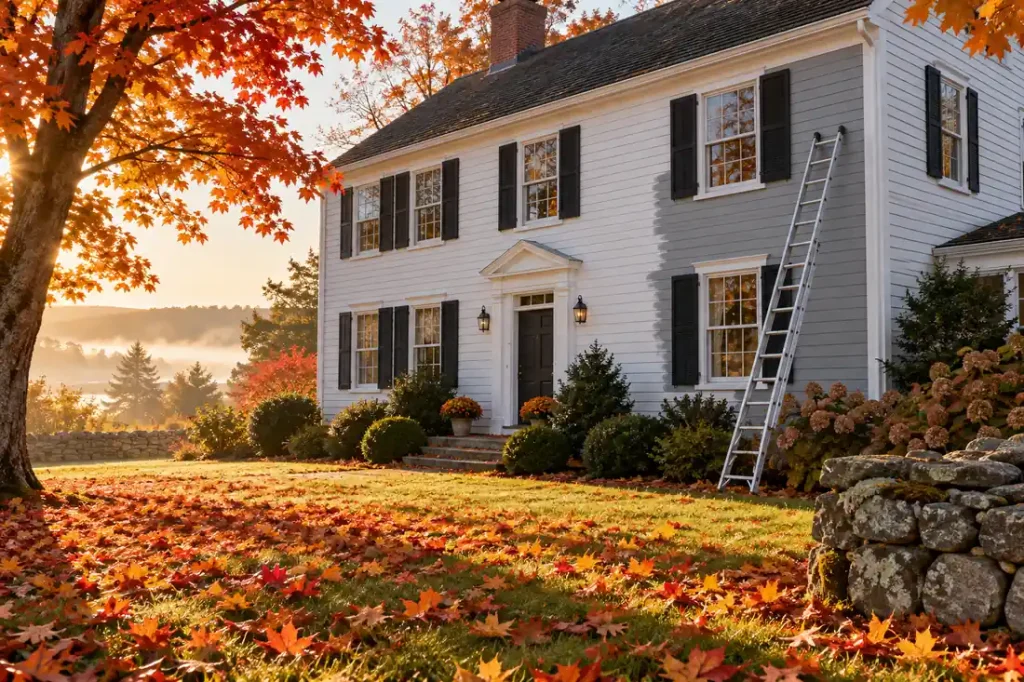
For most exterior paint, anything below 35 degrees is too cold. Many latex paints list 35 degrees as the lowest safe air temperature, and some oil based paints list 40 degrees. The label on your can has the final say, so always read it first. In Rhode Island, this matters most in late fall, when the days feel mild and the nights turn cold. Below, we cover what temperature is too cold to paint exterior walls, how cold changes drying time, and when to wait for spring.
What Temperature Is Too Cold to Paint Exterior Surfaces?
Paint needs the right warmth to form a tight, hard coat. When it is too cold, paint dries slowly, can look streaky, and may not stick well. Later it can crack or peel. Most latex exterior paints list 35 degrees or higher on the can, and the air should stay above that while the paint dries.
Air temperature is only part of the story. The wall can be colder than the air, especially in the morning and on the shady side of the house. Dew and frost can leave a thin film of water on siding that you cannot see. Paint over that wet film and it may not bond.
Before you open a can, run through a few quick checks. Each one takes a minute, and each one can save a paint job. Here is the list:
- The label lists a lowest safe temperature, and the air is above it.
- The siding is dry, with no dew or frost.
- The forecast stays above that number through the night and into the next day.
- No rain is expected for several hours after painting.
How Long Does Exterior Paint Take to Dry in the Cold?
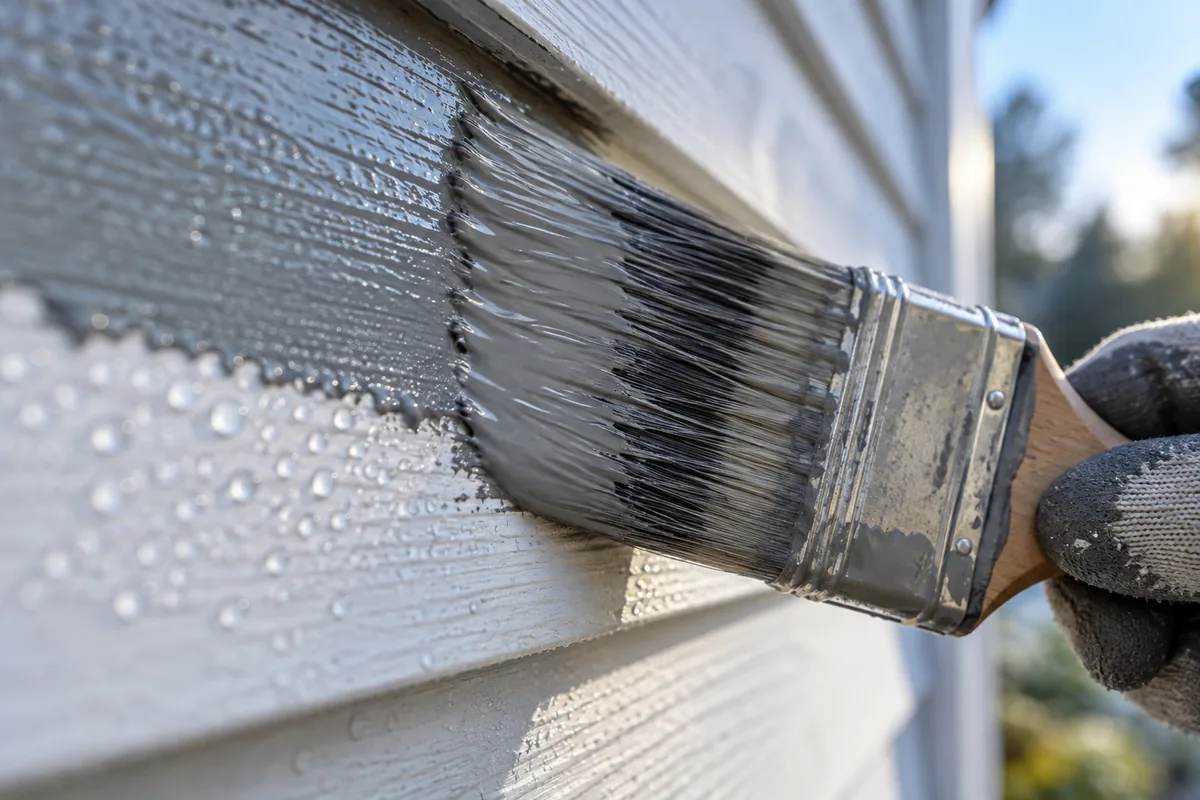
Cold air slows drying. In mild weather, many exterior latex paints feel dry to the touch in about an hour and are ready for a second coat in about four hours. In cold or damp weather, those times can stretch a lot. Follow the times on your label, and when in doubt, wait longer.
Dry to the touch does not mean fully hardened. Paint can take days to harden and a few weeks to reach full strength. That is why a cold snap right after painting can hurt a job that looked fine at first. Rain, frost, or heavy dew too soon can leave spots or marks in the finish.
Exterior Painting in Fall in Rhode Island
Early fall can be a good time to paint outside in Rhode Island. The air is often drier than in summer, and many days stay mild. But the window closes as nights get colder. Late fall can bring days that look fine and nights that drop below the safe line.
Short days matter too. The sun sets earlier, so wet paint has less time to dry before the evening chill and dew arrive. Painters often start later in the morning to let dew burn off and stop earlier in the afternoon. That slows the job and makes the schedule less certain.
If the forecast turns cold, waiting is often the smart call. A rushed job in the cold can peel in a year or two and lead to a repaint. At Catanzaro & Sons, we plan our exterior painting services around the weather, and we will tell you plainly when it makes more sense to wait for spring. If your home needs carpentry repairs first, fall is a good time to get them done so painting can start when the weather allows.
Conclusion
Most exterior paint needs the air to stay above about 35 degrees, but the label on your can is the rule to follow. Watch the surface, the dew, and the overnight low, not just the daytime high. Fall painting in Rhode Island can work well when the weather helps, and waiting is fine when it does not. If you are not sure whether it is too cold for your project, contact us for a free estimate and we will help you plan the right timing. You can also see our past work in our portfolio.