
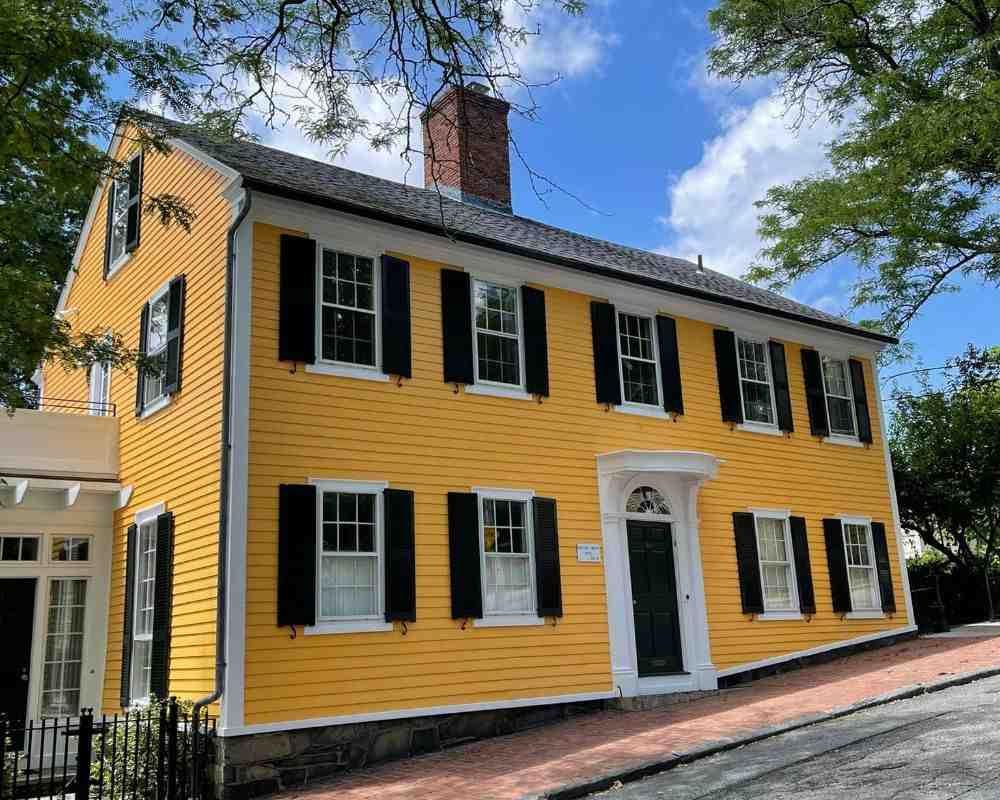
Introduction: Breathing New Life into History
Historic building restoration is the careful process of returning a building to its original appearance while preserving its character-defining features and ensuring it can function for modern use. Here’s what you need to know:
Essential Steps for Planning Your Historic Restoration:
- Choose your approach – Decide between preservation, rehabilitation, restoration, or reconstruction
- Research your property – Confirm historic status and gather documentation
- Steer regulations – Understand local preservation boards, permits, and building codes
- Assess structural integrity – Hire professionals to inspect foundations, roofs, and walls
- Assemble your team – Select contractors with proven historic restoration experience
- Budget for the unexpected – Plan for hidden issues like lead paint, asbestos, or structural damage
- Document everything – Keep detailed records of all work for future reference
Historic buildings are tangible links to our past. Restoring them preserves cultural identity, supports sustainable practices by reusing materials, boosts local economies, and revitalizes neighborhoods.
However, historic building restoration projects present unique challenges. You’re preserving history while making it functional for today, which means balancing modern codes with preservation standards, sourcing period-appropriate materials, and navigating complex regulations. The good news is that with proper planning and an experienced team, these challenges are manageable, changing a daunting project into a rewarding journey.
I’m Michael Catanzaro, and for over three decades, our family business has specialized in historic building restoration throughout Rhode Island, combining traditional craftsmanship with modern expertise to preserve our state’s architectural heritage. We’ve worked on countless historic homes, from ornate Victorian-era properties to early colonial structures, and we’ve learned that success comes from respecting the past while planning carefully for the future.
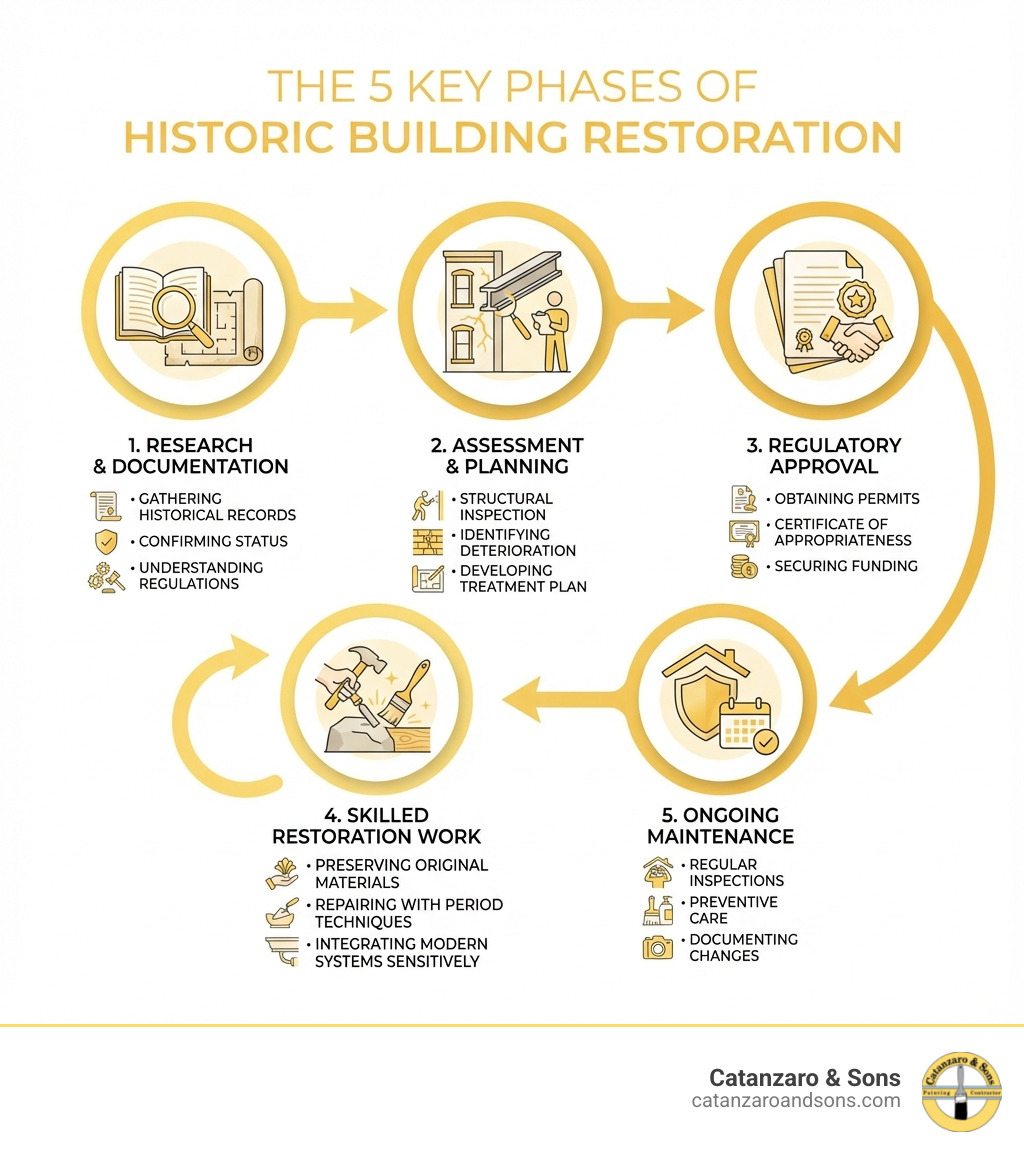
Laying the Foundation: Your Pre-Project Checklist
Before any physical work begins, ensuring your project is built on a solid base of research and clear goals is critical. This approach helps us avoid surprises and ensures a smooth journey from concept to completion.
Understanding the Four Approaches to Historic Properties
When we talk about working on historic buildings, it’s important to understand that not all projects are the same. The U.S. National Park Service (NPS) outlines four distinct approaches to treating historic properties: Preservation, Rehabilitation, Restoration, and Reconstruction. Each has its own goals and methods, and understanding these differences is crucial for planning your project.
While the introduction briefly touched on the difference between restoration and renovation, let’s dig deeper into these nuanced approaches. A “renovation” typically implies updating a space for modern use, often changing its original character, whereas “restoration” aims to return a building to a specific historical appearance. The NPS’s framework helps us define these intentions more precisely.
Here’s a breakdown of the four treatment approaches:
| Approach | Goal | When to Use |
|---|---|---|
| Preservation | Focuses on maintaining the existing integrity and materials of a historic property through careful upkeep and repair. | When a property is in good condition and its historic character is largely intact. |
| Rehabilitation | Adapts a property for a new or continuing use through repair or alterations, while retaining its historic character. | When a property needs significant upgrades or changes to be functional for modern use. |
| Restoration | Aims to accurately depict a property as it appeared during a specific period by removing later additions and reconstructing missing features. | When a property’s significance in a particular era is paramount and there is enough evidence for an accurate recreation. |
| Reconstruction | Recreates a non-surviving building or site with new construction, based on historical documentation. | When a property is gone but its recreation is important for interpretive or historical purposes. |
For more comprehensive guidance on these treatments, we often refer to The Secretary of the Interior’s Standards for the Treatment of Historic Properties (U.S. National Park Service). Understanding these distinctions is the first step in aligning your vision with established best practices, ensuring your project respects the building’s history while meeting your needs.
Research and Documentation: Uncovering Your Home’s Story
Every historic home in Rhode Island has a story to tell, and our job, as both guardians and craftsmen, is to listen carefully before we even pick up a brush or hammer. The research and documentation phase is where we uncover that story, providing the essential roadmap for any successful historic building restoration.
First, we need to confirm your building’s historic status. While the National Register of Historic Places is the official list of the nation’s historic buildings, many local and state registers in Rhode Island also recognize properties of significant historical value. Checking these resources helps us understand the legal and ethical obligations tied to your property.
Next, we dive into historical documents like deeds, old photographs, and architectural drawings. These archives hold invaluable clues about a building’s original design, materials, and alterations over time. For instance, a photo can reveal the original porch design, while old plans can clarify structural details, ensuring our work is historically accurate.
This research helps us understand your home’s unique “biography.” The more we know about its past, the better we can make informed decisions that honor its legacy. This documentation is crucial for guiding our work and creating a record for future generations.
Navigating Regulations and Compliance
Working on a historic building in Rhode Island means more than just having a keen eye for detail; it also requires navigating a specific set of regulations and compliance requirements. These frameworks are designed to protect the very heritage we cherish, ensuring that restoration efforts are carried out responsibly.
Many communities in Rhode Island have local historic preservation boards or commissions. These bodies oversee work on designated historic properties and districts, ensuring that proposed changes respect the building’s character and the neighborhood’s historical context. Before we begin any significant exterior work, we’ll need to understand their specific guidelines. For example, for exterior changes, a Certificate of Appropriateness (CoA) is often required, which means submitting detailed plans for approval. This ensures that alterations, even seemingly minor ones, don’t diminish the property’s historical integrity.
Beyond preservation guidelines, modern building codes also apply. While we’re dedicated to preserving historical accuracy, safety and functionality are paramount. This means integrating contemporary standards for structural integrity, electrical systems, plumbing, and fire safety, all while striving to conceal these modern upgrades within the historic fabric. Permit requirements will also be a key part of our planning. Aside from the standard state and local building permits, there may be additional permits specifically for historical work.
While navigating these regulations can seem daunting, it often comes with benefits. Many governments and organizations offer financial incentives for historic building restoration projects, including grants and tax credits. These programs encourage investment in heritage properties and can significantly offset project costs. We can help you identify potential opportunities and ensure your project complies with the necessary criteria to qualify. Understanding and adhering to these regulations from the outset is essential to avoid project delays and legal issues, allowing us to focus on the beautiful work of restoration.
The Craft of Preservation: Materials, Techniques, and Modern Solutions
Now that we’ve laid the groundwork, let’s explore the exciting part: the hands-on craft of preservation. This is where traditional skills meet modern innovation, creating authentic and lasting results for your historic property.
Key Historical Construction Materials and Techniques
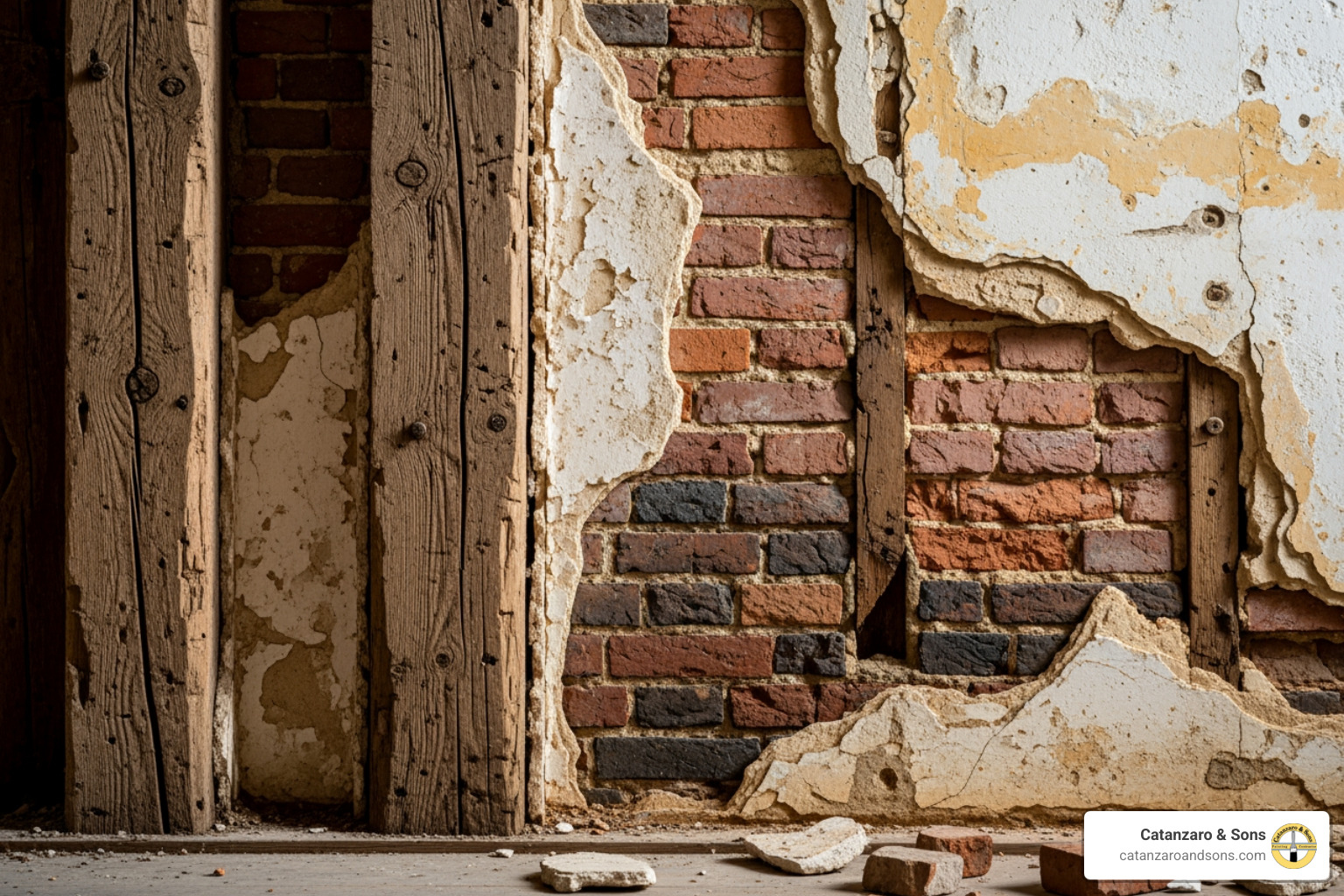
To truly restore a historic building, we must first understand the materials and techniques its original builders used. In Rhode Island, our architectural heritage spans centuries, reflecting an evolution of construction methods.
Early Rhode Island homes often used heavy timber framing. Later, with the advent of sawmills, “balloon framing” became common, using long studs from foundation to roof. This was eventually replaced by “platform framing,” where each floor is built as a separate unit. Understanding these methods is crucial for proper structural assessment and repair.
Heritage masonry is also key to Rhode Island’s architecture, from stone foundations to intricate brickwork. Brick patterns often indicate the construction period. Decorative concrete, used to mimic stone, and wrought iron for railings and gates were also common. Each material requires specialized techniques for authentic repair and replication.
Our approach is rooted in respect for these materials. We know that historic mortars were softer and lime-based, and using modern cement can cause damage. We prioritize preserving original wood rather than replacing it. This knowledge ensures we use compatible methods and materials, protecting your home’s longevity and authenticity.
The Role of Modern Technology in Historic Building Restoration
While we honor traditional craftsmanship, modern technology plays an increasingly vital role in historic building restoration. It allows us to approach these complex projects with greater precision, efficiency, and respect for the original structure.
One powerful tool is 3D scanning. This technology creates highly accurate digital models of a building, capturing every detail of its current state. From these scans, we can generate precise architectural drawings and even detect subtle deformations or structural issues that might be invisible to the naked eye. This detailed information then feeds into Building Information Modeling (BIM) software, allowing us to plan interventions with incredible accuracy, visualize proposed changes, and ensure new elements integrate seamlessly.
Modern technology also enables “invisible” structural reinforcements. Instead of bulky, visible supports, we can use advanced materials like carbon fiber or discreet steel systems to strengthen a building’s bones without altering its historic appearance. This is particularly important for structures that need to meet contemporary seismic or load-bearing requirements without sacrificing their aesthetic integrity.
Energy efficiency upgrades are another area where technology shines. While historic buildings weren’t designed with modern energy consumption in mind, we can integrate solutions like improved insulation, high-performance window glazing (that maintains historic appearance), and efficient HVAC systems. The goal is to make these buildings comfortable and sustainable without compromising their character-defining features. Similarly, accessibility solutions, such as discreet lifts or ramps, can be integrated thoughtfully to meet modern standards without impacting the historic aesthetic.
Finally, non-destructive testing (NDT) techniques allow us to examine materials and structures without causing damage. This includes ground-penetrating radar to assess foundations, thermal imaging to detect moisture, and even advanced photogrammetry for detailed surface analysis. These tools provide invaluable insights, helping us diagnose problems accurately and plan targeted, effective repairs. For us at Catanzaro & Sons, leveraging these technologies means we can offer the most informed and least invasive solutions for your historic property. Learn more about how we integrate innovation with tradition on our Historic Restoration Services page.
The Finishing Touches: Expert Carpentry and Painting
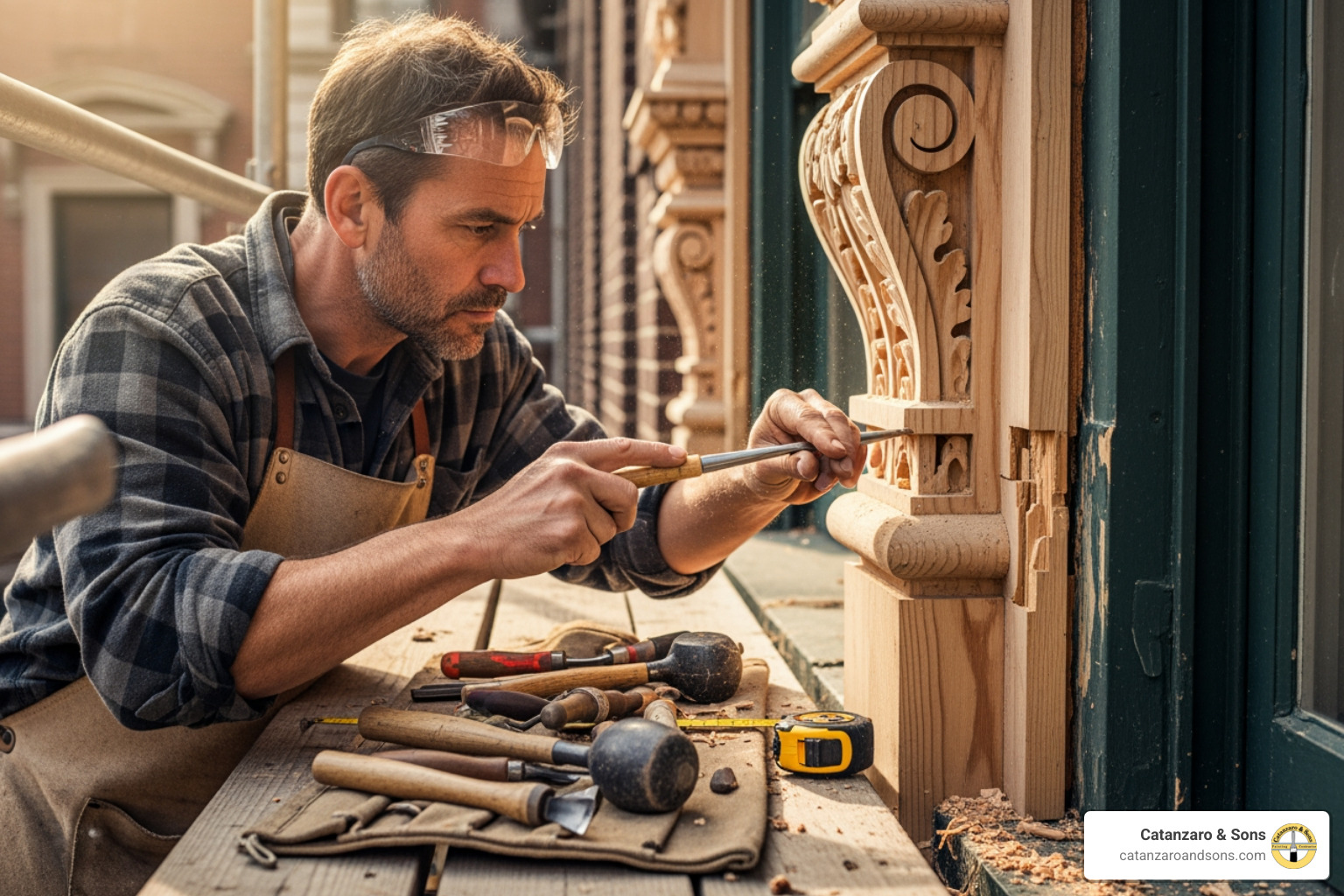
The true artistry in historic building restoration often comes down to the finishing touches: the intricate carpentry and the precise application of paint. These elements are where the character of a historic home truly shines, and they demand a level of expertise that respects the past.
Our skilled carpenters understand the nuances of historic millwork, from unique trim to ornate window frames. Replicating these details requires matching the profile, wood species, and joinery techniques for true authenticity. We excel at sourcing period-appropriate materials or custom-milling new pieces to blend seamlessly with existing elements. Our decades of experience ensure every detail is perfect. Explore our dedication to fine craftsmanship on our Expert Carpentry Services in Rhode Island page.
Similarly, historic paint analysis is a specialized skill we bring to every project. By analyzing paint chips, we can uncover the true historic palette of a building, revealing colors hidden for centuries. Using historically accurate colors and finishes is crucial for an authentic restoration and respects the building’s visual history. We use compatible, high-quality materials to ensure the finish is both beautiful and durable. Our commitment to preserving your home’s original beauty extends to every coat. Find more about our expertise in this area through our Specialized Exterior Painting Services.
These finishing touches are what transform a repaired structure into a living piece of history. They require patience, skill, and an unwavering commitment to authenticity—qualities we proudly embody at Catanzaro & Sons.
Overcoming Common Problems in Historic Building Restoration
Every historic project has its unique challenges, much like an old friend with a few fascinating quirks. Here’s how we anticipate and address the most common issues you might face during your historic building restoration.
Identifying and Addressing Agents of Deterioration
Historic buildings, having stood for decades or even centuries, are constantly battling various “agents of deterioration.” Understanding these threats is the first step in effective preservation.
- Physical Forces: Rhode Island’s weather, from storms to snow, can cause structural damage like cracked foundations or dislodged masonry. We perform careful evaluations and repairs to strengthen the building while preserving original materials.
- Fire Damage: Fire damage requires a careful response. Restoration involves replacing burnt components with historically accurate and compatible materials.
- Water and Moisture: This is a common culprit, causing rot, peeling paint, and mold. Our strategy is to find and fix the source, then carefully dry and restore the affected areas, matching original materials whenever possible.
- Pests: Termites, carpenter ants, and other pests can damage wooden structures. We use proactive measures, inspections, and targeted treatments to prevent and address infestations.
- Pollutants: Airborne pollutants can discolor and erode stone and brick. We use gentle cleaning methods and protective coatings to mitigate this damage without harming the historic fabric.
For a comprehensive understanding of these threats, we refer to resources like A guide to the agents of deterioration. Proactively addressing these agents ensures the long-term health and stability of your historic property.
Structural Integrity and Unforeseen Issues
One of the biggest challenges, and sometimes the biggest adventure, in historic building restoration is encountering unforeseen issues, particularly concerning structural integrity. It’s like opening a time capsule—you never quite know what you’ll find!
Assessing foundations is paramount. Older Rhode Island homes often have fieldstone or brick foundations that can settle, causing cracks or moisture issues. A professional inspection is essential to determine the foundation’s condition and plan minimally invasive repairs. We examine the entire load-bearing system for signs of stress.
Similarly, a detailed roof and wall examination is critical. The roof is the first line of defense against water, and its condition directly impacts the entire structure. We look for signs of water intrusion, rot in framing, and compromised masonry. Walls may show signs of bulging, cracking, or deterioration that indicate deeper structural issues.
Then there are the hidden hazards. Many older homes contain lead paint or asbestos, materials commonly used in the past that require specialized handling and remediation today. Finding these during a project means careful planning for their safe removal or encapsulation, which can impact both timeline and budget. Other hidden problems might include outdated or unsafe electrical wiring, compromised plumbing, or even unsuitable soils beneath the foundation.
Due to these potential unknowns, a contingency budget is essential. We always advise clients to plan for unforeseen issues that may arise during renovation. A thorough initial inspection helps minimize surprises, but flexibility is key. Our experience in historic restoration in Rhode Island means we’re adept at finding practical, historically sensitive solutions to any challenges.
Assembling Your Dream Team: Choosing the Right Contractor
The success of your historic building restoration project hinges on the skill and experience of your team. This isn’t just any construction job; it’s a specialized craft that requires a deep understanding of history, materials, and traditional techniques. Learning how to select the perfect partners for your restoration journey is crucial.
What to Look for in a Historic Restoration Specialist
Choosing a contractor for your historic home means finding a partner who shares your passion for preservation. Here’s what to look for in a specialist:
- Proven Track Record: Look for a contractor with extensive experience specifically in historic properties. They should be able to provide examples of similar projects they’ve successfully completed. We are proud to showcase our diverse range of past projects on our Portfolio page, demonstrating our commitment to quality and authenticity.
- Understanding of Local Architecture: A specialist in Rhode Island will be familiar with the architectural styles, common building materials, and historical context unique to our region. This local knowledge is invaluable for making appropriate restoration decisions.
- In-House Skilled Trades: Historic restoration often requires specialized skills in carpentry, masonry, plasterwork, and painting that are distinct from modern construction. A team with in-house artisans or strong relationships with experienced craftspeople ensures consistent quality and adherence to traditional methods.
- Strong Project Management: These projects are complex, involving multiple specialists, strict timelines, and regulatory problems. Effective project management is essential to keep things on track, on budget, and running smoothly.
- Commitment to Quality: Look for a contractor who prioritizes preserving original fabric, uses period-appropriate materials, and has an unwavering dedication to the highest standards of craftsmanship. They should be transparent about their process and committed to achieving an authentic result.
At Catanzaro & Sons, we build on a foundation of trust and honesty. Our skilled team stays current with the latest preservation techniques to ensure we’re always at the forefront of the field.
Why Experience Matters More Than the Lowest Bid
While it’s tempting to choose the lowest bid, with historic building restoration, experience matters more than cost. A “cost-first” approach can lead to compromised quality and expensive mistakes. A skilled team is an investment in your property’s longevity and authenticity that pays dividends for generations.
Here are some questions to ask a potential contractor, highlighting why experience is paramount:
- Can you provide references from previous historic restoration clients? (Look for enthusiastic testimonials about their historical sensitivity and problem-solving skills.)
- How do you approach unforeseen issues common in historic properties (e.g., lead paint, asbestos, hidden structural damage)? (An experienced contractor will have clear, safe protocols and contingency planning.)
- What is your process for researching and sourcing period-appropriate materials? (They should demonstrate knowledge of historic materials and where to find or replicate them.)
- How will you ensure compliance with local historic preservation regulations and building codes? (They should be well-versed in Rhode Island’s specific requirements and permit processes.)
- Do you have in-house specialists for traditional trades like historic carpentry, masonry, or plasterwork, or do you work with trusted subcontractors? (Direct control over these trades is a huge advantage.)
- What is your philosophy on balancing modern functionality with historical accuracy? (Look for a nuanced approach that prioritizes preservation while integrating necessary upgrades discreetly.)
- What kind of warranty or guarantee do you offer on your work? (A strong guarantee reflects confidence in their craftsmanship.)
For over 30 years, Catanzaro & Sons has combined traditional craftsmanship with modern expertise to preserve Rhode Island’s architectural heritage. We stand by our work with a 100% work guarantee, because we know that the initial cost of inexperience can far outweigh the savings of a low bid. Choosing the right professionals—ones who are invested in the longevity and authenticity of your project—is the single most critical decision you’ll make for your historic home.
Your Legacy Awaits: Begin Your Restoration Journey
Restoring a historic building is more than a construction project; it’s an act of preserving a piece of our shared story for future generations. It’s about honoring the past, creating beauty in the present, and leaving a lasting legacy for the future. With careful planning, a deep respect for the past, and the right team by your side, you can steer the process with confidence and create a legacy that lasts.
The journey of historic building restoration can be complex, filled with unique challenges and rewarding findies. But the outcome—a beautifully preserved home that continues to tell its story and serve its community—is immeasurably valuable. We believe that every historic home in Rhode Island deserves to be cherished and maintained, and we are dedicated to making that a reality.
Ready to restore your historic property?
If you’re considering a historic building restoration project in Rhode Island, we invite you to partner with a team that truly understands the art and science of preservation. Our family-owned business brings decades of experience, a passion for craftsmanship, and a commitment to your complete satisfaction. From meticulous project planning and expert consultation to the highest quality craftsmanship in carpentry and painting, we are here to guide you every step of the way.
Contact Us today to discuss your vision – let’s breathe new life into your historic property together.


