Why a Fresh Coat is More Than Just Color
Exterior wood painting is the process of applying protective and decorative coatings to your home’s exterior wood surfaces to shield them from weather damage while enhancing curb appeal.
Key Takeaways:
- Prep is 70% of the job – cleaning, scraping, and sanding determine paint longevity.
- Choose the right products – 100% acrylic latex for siding, oil-based primer for bare wood.
- Weather matters – paint between 50-85°F with low humidity, and never in direct sun.
- Two coats are essential for durability and protection.
- Expect 5-10 years of protection from a quality paint job.
Your home’s wooden exterior faces a daily battle with Rhode Island’s coastal moisture, frigid winters, and summer sun. This assault causes paint to crack, peel, and fade. Left unchecked, moisture seeps into bare wood, inviting rot, mold, and costly structural damage. A quality paint job creates a waterproof barrier that can extend your wood’s lifespan by 5-10 years and boost your home value by 2-5%.
It’s time to repaint when you see:
- Paint peeling or bubbling
- Faded or chalky surfaces
- Cracked caulk around windows and trim
- Soft, spongy wood that indicates rot
Whether you DIY or partner with experienced professionals like our family at Catanzaro & Sons, understanding the process is key. For over 30 years, we’ve helped Rhode Island homeowners protect their investments. This guide walks you through every step, from crucial prep work to choosing products that last in New England weather.
The Foundation of a Flawless Finish: Surface Preparation
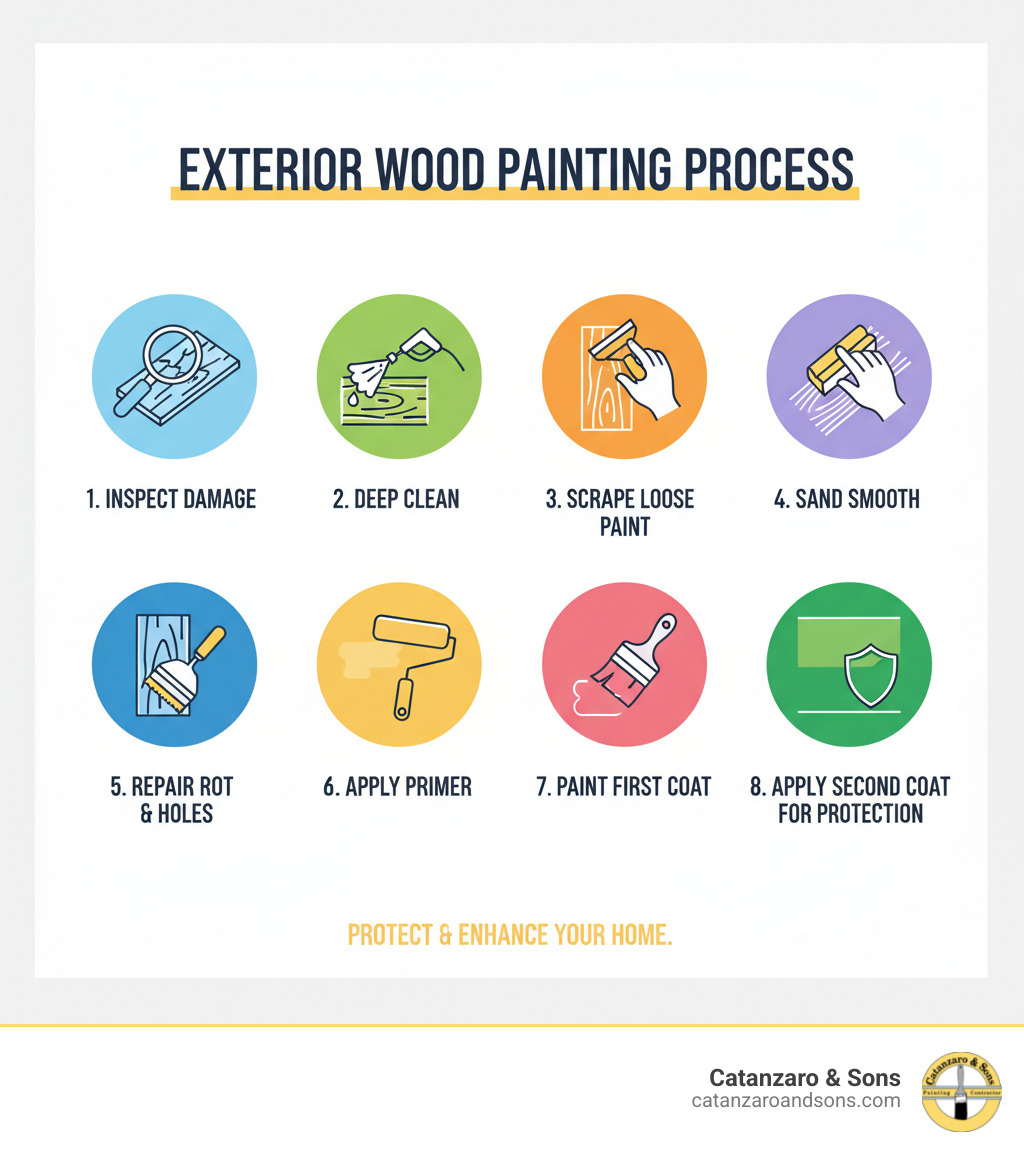
Here’s the truth about exterior wood painting: no amount of premium paint will save a job with poor prep work. Proper preparation can extend your paint job’s lifespan by up to 50%, turning a 3-year job into one that lasts a decade.

Before painting, we inspect the entire exterior for peeling paint, mold, rot, and cracked caulk. This step is vital for the historic homes in our Rhode Island neighborhoods, as older wood has unique needs. The National Park Service’s expert guidance on wood preservation confirms that proper surface preparation is everything.
Step 1: The Deep Clean
Paint won’t bond to a dirty surface. A thorough cleaning is where every successful paint job begins. We use a pressure washer at a low PSI (around 1600 max) with a flat nozzle, spraying downward to avoid forcing water under siding. For mold and mildew, common in Rhode Island’s humidity, a solution of one cup of bleach per gallon of water is effective. After cleaning, the wood must dry completely for 24-48 hours. We use a moisture meter to ensure the wood’s moisture content is below 15% before proceeding.
Step 2: Scraping and Sanding Away the Past
This is the most labor-intensive part. All loose, peeling, or bubbling paint must be removed. New paint will just peel off with the old failing paint underneath. We use quality carbide-blade scrapers, working with the grain to avoid gouging the wood. If your home was built before 1978, assume lead paint is present. Wear an N95 respirator, use safety glasses, and collect all paint chips for proper disposal according to EPA guidelines.
After scraping, we sand to create a smooth, uniform surface. We use 80-grit sandpaper for rough spots and 120-grit for a finer finish, “feathering” the edges where old paint meets bare wood. Always sand with the grain and use a HEPA vacuum to control dust.
Step 3: Repairing Damage and Imperfections
With the wood exposed, we address any structural problems. Wood rot is a common enemy in our damp climate. Minor rot can be treated with wood hardeners and epoxy fillers. However, if more than 10% of a board is decayed, it must be replaced. This is where our integrated carpentry services are invaluable, as our skilled carpenters can seamlessly replace damaged sections, preserving your home’s character.
We fill nail holes and cracks with exterior-grade wood filler and set any protruding nail heads. Finally, we apply a urethane acrylic caulk to seal all seams around windows, doors, and trim. This creates a waterproof barrier, preventing moisture from destroying your wood and paint.
Choosing Your Arsenal: The Right Tools, Primer, and Paint
With your surface prepared, it’s time to gather your materials. The quality of what you use directly impacts the final result.
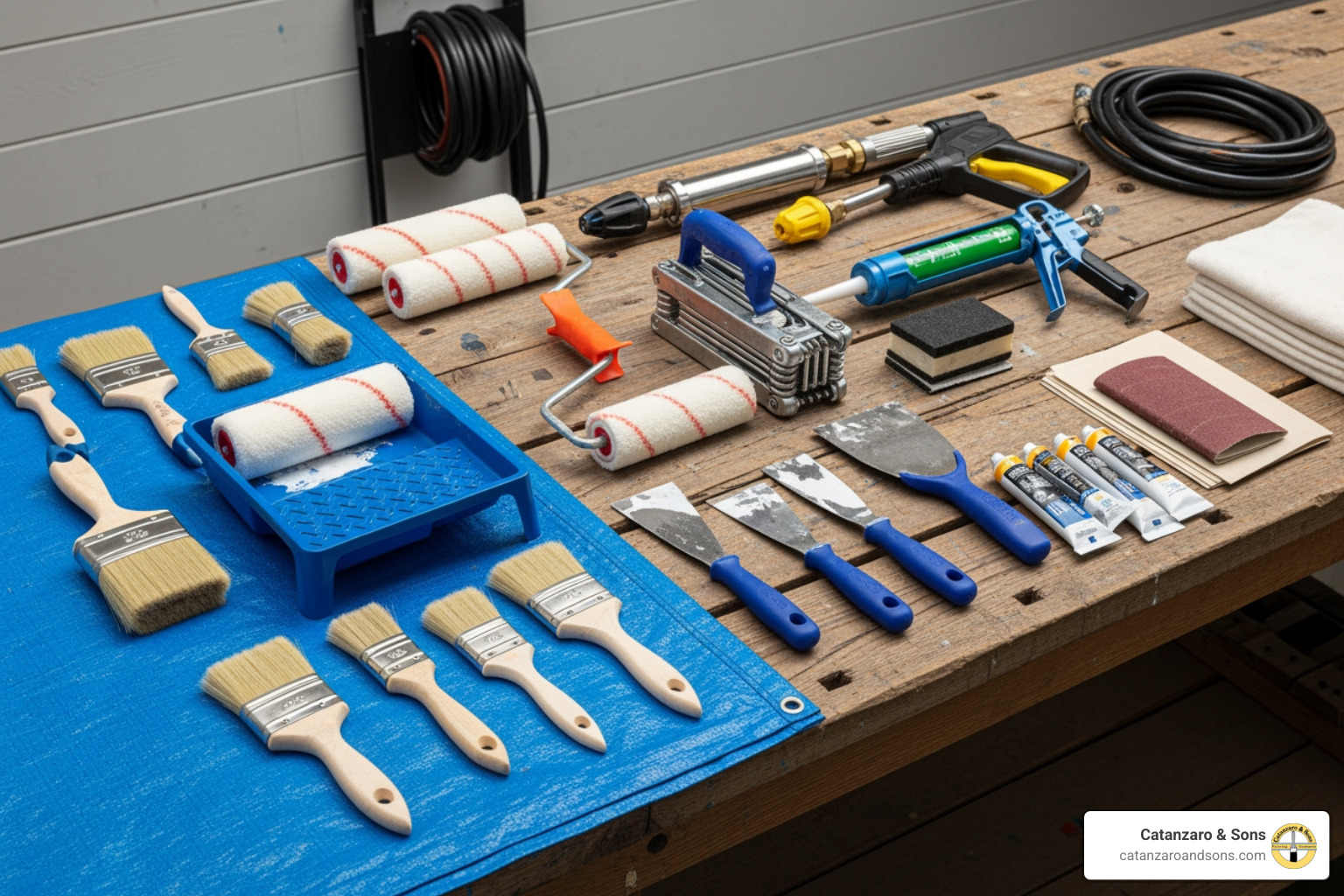
After three decades of exterior wood painting in Rhode Island, we know the right tools are crucial. You’ll need a low-PSI pressure washer, various scrapers, an orbital sander (80- to 220-grit), high-quality angled brushes, and rollers. For efficiency on larger homes, an airless sprayer is a great option. Don’t forget a caulk gun, putty knives, sturdy ladders, and safety gear (respirator, glasses, gloves). Quality drop cloths and painter’s tape are essential for protection.
Choosing the Right Primer for Exterior Wood Painting
Primer is the foundation that makes your paint job last. It’s not an optional step.
Oil-Based Primers: Our top choice for bare wood, especially cedar and redwood. These woods contain tannins that bleed through water-based products, causing stains. An oil-based primer like Zinsser Cover Stain seals these tannins and creates a strong bond.
Latex/Acrylic Primers: Excellent for previously painted surfaces in good condition. They dry faster and clean up with soap and water.
A professional trick is to tint your primer to a shade close to your topcoat color. This improves coverage and makes it easier to spot missed areas.
Choosing the Right Paint for Exterior Wood Painting
The paint you select is your home’s shield against New England’s weather. This is not the place to cut corners.
For most exterior wood painting projects, we recommend 100% acrylic latex paint. Modern acrylics are flexible, expanding and contracting with wood to resist cracking. They also offer excellent UV resistance, keeping colors vibrant. Premium options like Benjamin Moore Aura Exterior or Sherwin-Williams’ Emerald Rain Refresh offer superior durability and even self-cleaning properties.
Regarding sheen (gloss level):
- Satin/Low-Lustre: The perfect balance for siding. It resists dirt, is easy to clean, and forgives minor surface imperfections.
- Semi-Gloss: Ideal for trim, doors, and windows. The shine provides superior durability and easy cleaning for high-traffic areas, making these features pop visually.
- Flat/Matte: Hides imperfections well but is less durable and harder to clean, making it a poor choice for most exteriors.
The Main Event: Your Guide to Flawless Exterior Wood Painting
After all the prep work, it’s time to apply the paint. The right technique is crucial for a long-lasting finish.
Best Practices for Applying Paint
Whether using a brush, roller, or sprayer, proper technique ensures maximum protection. For large areas, many pros use the back-brushing technique: roll on the paint, then immediately follow with a brush to work it into the grain for better adhesion.
If using an airless sprayer, maintain a consistent distance (about 12 inches) and overlap each pass by 50% for even coverage. Many professionals, including our team, will spray a section and immediately back-brush it.
Always work from top to bottom to prevent drips on finished areas. Maintain a “wet edge” by overlapping into wet paint to avoid visible lines. Your paint job needs a primer coat plus two topcoats for lasting protection. Allow proper drying time between coats (2-4 hours, but up to 24-48 in high humidity).
We’ve completed hundreds of exterior wood painting projects across Rhode Island. You can see our attention to detail in our portfolio.
Ideal Weather and Timing
Rhode Island’s coastal climate can be tricky. Painting in the wrong conditions will sabotage your work.
- Temperature: The ideal range is 50-85°F. Below 50°F, paint won’t cure properly. Above 85°F, it dries too fast, causing blisters.
- Humidity: Aim for below 70% (ideally below 50%). High humidity slows drying and can trap moisture.
- Sunlight: Avoid painting in direct sun. Follow the shade around your house to prevent the paint from drying too quickly.
- Rain: Check the forecast. Rain within 24 hours of painting can ruin the finish.
Painting Trim, Doors, and Architectural Details
These elements give your home character and require a steady hand. Cutting in—creating clean lines where colors meet—is an art. Use a quality angled brush and controlled strokes. For these high-touch areas, we recommend a durable semi-gloss or satin finish.
Protect adjacent surfaces with quality painter’s tape. Most professionals paint the trim and details after the main body of the house is finished, as this makes for cleaner lines and easier touch-ups.
The Finish Line: DIY vs. Pro, Cleanup, and Color Trends
As your exterior wood painting project nears completion, a few final steps will ensure your finish lasts for years.
DIY or Hire a Pro?
Tackling this project yourself can save thousands in labor costs and offers the satisfaction of a job done with your own hands. However, this project is deceptively demanding. Most homeowners underestimate the time and physical toll of proper preparation, which accounts for 70% of the project’s success. Working on ladders also presents serious safety risks.
For historic homes, the stakes are even higher, as improper techniques can damage irreplaceable features.
When you partner with professionals like our family at Catanzaro & Sons, you’re investing in over 30 years of Rhode Island-specific expertise. We understand our coastal climate and know which products and techniques work best. Our integrated carpentry services mean we can properly address rot, not just paint over it. We complete projects efficiently, have the right commercial-grade tools, and back our work with a 100% guarantee.
The decision depends on your time, skill, and the project’s complexity. If you’re considering professional help, learn How to Choose the Right Painting Contractor in Rhode Island for Your Home or Business or explore our Exterior Painting Services across Rhode Island.
Proper Cleanup and Waste Disposal
- Tools: Clean brushes and rollers immediately. Use warm, soapy water for latex paints and mineral spirits for oil-based products.
- Leftover Paint: Seal cans tightly, label them with the color and date, and store them in a cool, dry place where they won’t freeze.
- Lead Paint Disposal: For homes built before 1978, paint chips and dust are hazardous waste. Do not throw them in the regular trash. Seal all debris in plastic bags and contact your local Rhode Island waste authority for disposal guidelines, as required by the EPA.
Popular Colors and Testing Your Palette
Choosing an exterior color is a 5- to 10-year commitment. Classic palettes like muted greens, deep blues, warm grays, and crisp whites are timeless choices for New England homes. Bolder choices like charcoal grey or black are also gaining popularity.
Testing your color choices is critical. A small paint chip looks completely different on a large wall in changing light. Purchase sample pots and paint large (2×2 feet) swatches on different sides of your house (north, south, east, west). Live with them for a few days to see how they look in different light conditions and at different times of the day. This simple step prevents years of regret.
Frequently Asked Questions about Exterior Wood Painting
How often should I repaint my exterior wood siding?
A quality exterior wood painting job typically lasts 5-10 years. In harsh coastal areas like Narragansett, you may be closer to the 5-year mark due to salt and moisture. We recommend inspecting your home annually for peeling, cracking, or chalking. If these signs appear on more than 10-15% of your home, it’s time to plan a repaint.
Can I paint over old paint?
Yes, but only if the existing paint is in solid condition—no peeling, bubbling, or flaking. You’ll still need to clean, lightly sand the surface for grip, and prime any bare spots. If the old paint is failing, it must be completely removed. Painting over it will only cause the new paint to peel off with the old layer, wasting your time and money.
What’s the biggest mistake homeowners make?
After 30 years in this business, the answer is clear: skipping or rushing surface preparation. Prep work accounts for 70% of a paint job’s longevity. Other common mistakes include ignoring weather conditions (painting in direct sun or when it’s too cold/humid), rushing between coats, and underestimating the time and physical effort the project requires.
Your Home Deserves the Best
A successful exterior wood painting project protects your investment, boosts curb appeal, and increases property value. While the DIY route can be rewarding, it’s a demanding job where proper preparation and technique are non-negotiable for a lasting finish.
Many homeowners find the project more complex than anticipated, especially the prep work and safety requirements. For historic homes, specialized knowledge is crucial to preserve architectural integrity.
That’s where our family at Catanzaro & Sons comes in. For over 30 years, we’ve helped Rhode Island homeowners protect and beautify their properties. We are a local, family-owned business built on trust, honesty, and a 100% dedication to customer satisfaction. Our integrated carpentry and painting services, backed by a 100% work guarantee, ensure the job is done right.
We understand the unique challenges of Rhode Island’s weather and have the expertise to deliver a flawless finish that lasts. If you’re ready to give your home the protection and beauty it deserves, we’re here to help. Get a flawless, long-lasting finish for your home in East Providence, RI, or anywhere across Rhode Island.