Why Church Interior Painting Preserves Sacred Spaces for Generations
Church interior painting is the specialized craft of restoring, protecting, and beautifying worship spaces through careful surface preparation, breathable coatings, and authentic color matching—all while preserving historic features and maintaining active congregation schedules.
What Makes Church Interior Painting Different:
- Historic Preservation – Requires breathable, vapor-open coatings that protect original plaster, wood, and masonry without trapping moisture
- Specialized Preparation – Addresses water damage, lead-safe paint removal, and delicate substrate repairs using lime-based plaster and Level-3 prep techniques
- Decorative Restoration – Recreates gold leaf, stenciling, faux finishes, and murals buried under decades of paint
- Minimal Disruption – Uses phased scheduling, low-VOC systems, and protective coverings to allow services to continue
- Sacred Asset Protection – Safeguards stained glass, organs, altars, and iconography during the painting process
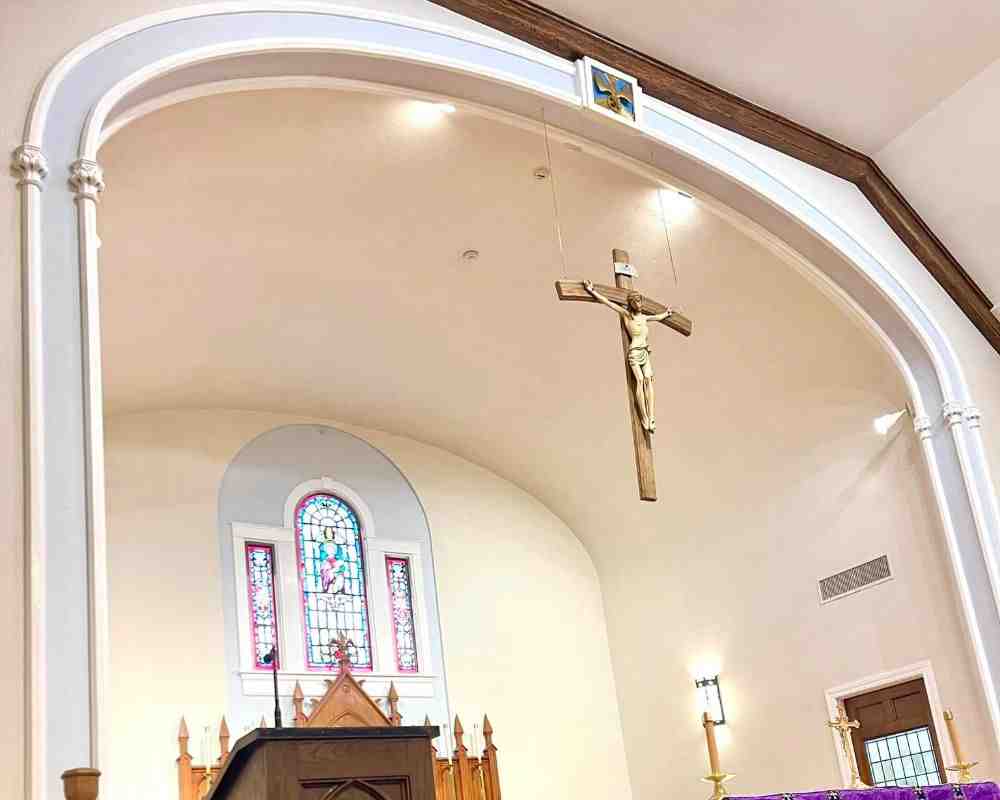
The majority of America’s churches were built in the 19th century, when immigrants used architecture and artwork to tell Bible stories. Yet 90% of that original artwork is now buried underneath layers of paint, particularly in Catholic churches following changes in the 1960s and 1970s. Today’s church interior painting work brings those sacred spaces back to life—treating them not just as buildings, but as visual catechisms that communicate meaning, inspire reflection, and strengthen community.
Unlike standard commercial repainting, church interior painting demands conservation-minded planning, substrate-specific systems, and respect for both the building’s heritage and its active role in daily worship. From managing moisture in 150-year-old plaster to matching historic color palettes through lab analysis, every decision balances preservation with practical durability.
I’m Michael Catanzaro, and through Catanzaro & Sons, we’ve specialized in residential and commercial painting, including historic home restorations, for three decades throughout Rhode Island. Our experience with church interior painting projects has taught us that these sacred spaces require meticulous care, honest communication with congregations, and craftsmanship that honors both the building’s past and its future.
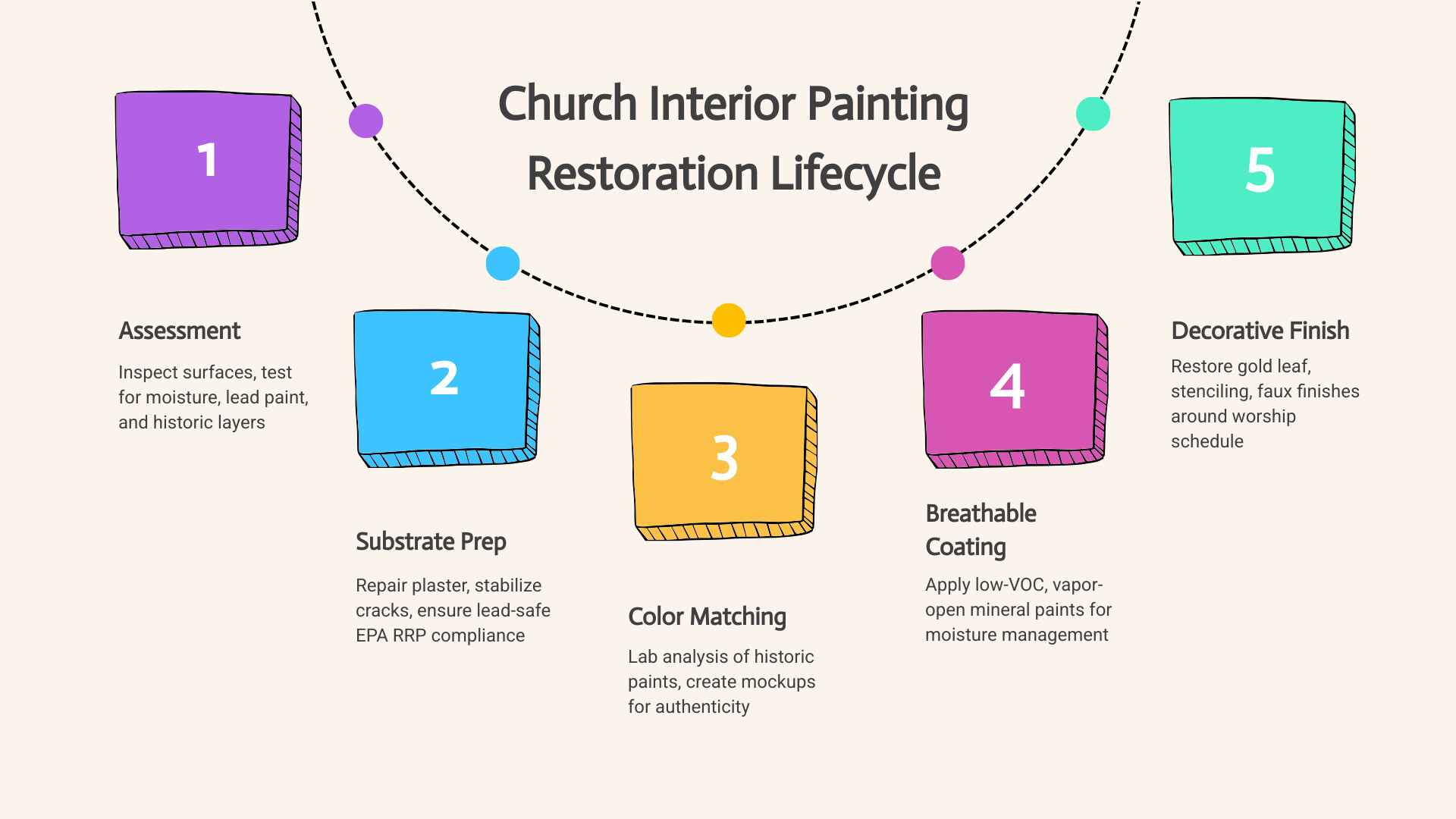
Basic church interior painting terms:
The Art and Science of Church Interior Painting

When we step into a historic church in Barrington or the East Side of Providence, we aren’t just looking at four walls and a ceiling. We are looking at 19th-century architecture designed to evoke a spiritual response. The historic significance of these spaces cannot be overstated; they were often built with a level of craftsmanship that exceeds even modern museums.
For many congregations, the sanctuary acts as a “theatre of the divine,” where every color, shadow, and gilded edge supports the liturgy. Achieving aesthetic harmony in such a space is both an art and a science. It requires Church Painters who understand how light interacts with high vaulted ceilings and how certain hues can either celebrate the architecture or hide its best features.
As a church painting contractor, we view our role as stewards of cultural heritage. Whether we are working on a Gothic Revival structure with soaring arches or a more modest Colonial-style chapel, the emotional impact of a fresh, historically accurate interior is profound. It breathes new life into the community’s spiritual home, ensuring that the visual stories told through the architecture remain vibrant for the next fifty years.
Addressing Deterioration and Substrate Preparation
Before a single drop of paint is applied, the “bones” of the church must be made sound. In many Rhode Island churches, the most common enemy is moisture. Decades of roof leaks or window frame failures can lead to extensive water damage in historic plaster.
We often find that old plaster has pulled away from its wood lathes. To fix this properly, we don’t just patch the surface. We re-secure the lathes, sometimes using a wire screen base, and apply new plaster in three distinct layers, allowing each to dry fully. This ensures the repair is as strong as the original wall, adhering to the principles found in Decorative Painting: Successful Projects in Sacred Settings.
Lead-Safe Practices and Compliance
Because most historic churches were built well before 1978, lead-based paint is a reality we must manage. We strictly follow EPA RRP compliance, using HEPA-filtered sanders, wet-scraping methods, and full containment to ensure the sanctuary remains safe for parishioners.
Level-3 Preparation
For a professional finish, we utilize what is known as Level-3 preparation. This goes beyond simple cleaning and includes:
- Addressing “nail pops” and drywall damage.
- Stabilizing cracks in masonry and plaster.
- Re-caulking trim and moldings.
- Spot priming repaired areas to ensure uniform absorption.
| Feature | Standard Commercial Prep | Historic Church Restoration Prep |
|---|---|---|
| Surface Repair | Basic spackling and sanding | 3-layer lime-based plaster restoration |
| Lead Handling | Standard dust control | Full EPA RRP containment & HEPA filtration |
| Moisture Check | Visual inspection | Deep substrate moisture & humidity testing |
| Cleaning | General degreasing | Conservation-grade gentle cleaning |
| Priming | Standard latex primer | Vapor-open, breathable mineral primers |
Specialized Techniques for Church Interior Painting
Historic buildings need to “breathe.” Unlike modern homes, older churches were designed to allow moisture to move through the walls. If you use a standard, non-breathable latex paint, you risk trapping moisture, which leads to blistering and peeling.
We utilize mineral paints and silicate systems. These are vapor-open topcoats that chemically bond with the masonry or plaster while allowing water vapor to escape. These low-VOC solutions are also excellent for sanctuary acoustics, as they don’t create a “plastic” film that causes harsh sound reflections. Furthermore, moisture management and humidity control are essential; we often recommend dehumidification strategies to ensure the new finishes last 10 to 15 years or longer.
Protecting Sacred Assets During the Process
A challenge in church interior painting is working around delicate, irreplaceable features. You can’t just move a pipe organ or a 100-year-old altar. We take extensive measures to protect:
- Stained Glass: Custom-fitted coverings ensure no paint splatter or dust reaches the leaded glass.
- Pipe Organs: We use specialized dust containment and HEPA filtration to keep fine particles out of the delicate pipes and bellows.
- Murals and Iconography: If we aren’t restoring them, we encapsulate them in protective, non-acidic barriers.
- Woodwork: Pews, balcony rails, and altars are covered with heavy-duty drop cloths and plastic sheeting, ensuring the sanctuary remains pristine.
Restoring Historic Colors and Decorative Finishes
How do you know what color a church was in 1890? It takes more than a guess. We perform a “finish investigation,” which involves creating “exposure windows”—carefully scraping back layers of modern paint to reveal the original scheme. For more complex projects, lab analysis of paint chips can identify the exact pigments used a century ago.
Our Interior Painting Services Complete Guide details how we approach these high-stakes color matches. Once the palette is determined, we often apply “mockups”—large samples on the sanctuary walls—so the clergy and committee can see how the colors look under both natural morning light and artificial evening light.
Decorative Finishing Techniques
To truly restore a church to its former glory, we employ several specialized artistic techniques:
- Gold Leaf: Applying thin sheets of real gold to capitals, crosses, and moldings for a timeless, divine glow.
- Stenciling: Recreating intricate patterns that may have been whitewashed in the mid-20th century.
- Trompe l’oeil: A French term meaning “deceives the eye,” used to create the illusion of three-dimensional architectural details on a flat wall.
- Faux Wood Graining and Marbleizing: These techniques allow us to make simple plaster columns look like expensive Carrara marble or mahogany, providing a dignified look at a fraction of the cost.
- Glazing: Adding layers of transparent color to provide depth and “soul” to the walls.
Logistics, Safety, and Congregational Continuity
We understand that a church is a busy place. Between Sunday services, weddings, funerals, and community meetings, there is rarely a “down” time. That’s why we prioritize phased scheduling. We might work in the vestibule and hallways during the week and ensure everything is clean and accessible by Sunday morning.
Specialized Equipment
To reach those 50-foot cathedral ceilings, we don’t just use ladders. We employ:
- Self-propelled boom lifts: These are compact enough to fit through standard church doors but can reach the highest points of the nave.
- Cantilevered scaffolding: This allows us to work over pews without having to move them, which saves time and money for the congregation.
- Site Safety: We maintain a clean job site with daily debris removal and clear communication with the clergy to ensure no one is ever in harm’s way.
Budgeting and Planning Your Church Interior Painting Project
Cost is always a factor for non-profits and religious organizations. Church interior painting is an investment, and the price is influenced by:
- Access Challenges: How high are the ceilings? Can we use a lift, or is complex scaffolding required?
- Substrate Condition: Is the plaster crumbling, or just dirty?
- Hazardous Materials: Does the old paint contain lead or asbestos?
Many of our clients fund these projects through a mix of parishioner donations, multi-year maintenance funds, and historic preservation grants. We are happy to work with historic district commissions and diocesan boards to provide the necessary documentation and submittals for approval. Following the Secretary of the Interior’s Standards for restoration ensures that the work is eligible for certain types of funding and preserves the building’s landmark status.
Frequently Asked Questions about Church Painting
How long will a professional church interior paint job last?
When using high-quality mineral paints and proper preparation, a church interior should look beautiful for 10 to 15 years. Decorative finishes like gold leaf and stenciling can last 30 to 50 years if the environment is kept stable and moisture-free.
Can we continue to hold services during the painting project?
Absolutely. Most projects are phased to allow the sanctuary to remain functional. We use low-VOC, low-odor paint systems so that the smell of fresh paint doesn’t distract from worship. We also perform a thorough “Friday cleanup” to ensure the space is ready for weekend services.
How are historic paint colors accurately matched?
We use a combination of physical scrapings, microscopic analysis, and modern color-matching technology. We then provide on-site mockups because the way a color looks in a lab is very different from how it looks under a 40-foot vaulted ceiling.
Conclusion
At Catanzaro & Sons, we believe that painting a church is a sacred trust. As a family-owned business with over 30 years of experience in Rhode Island, we bring a level of honesty, trust, and craftsmanship that is hard to find. We specialize in historic restoration, ensuring that your sanctuary remains a beautiful place of worship for generations to come.
Whether you are in Barrington, Narragansett, or the East Side of Providence, our 100% satisfaction guarantee means we don’t leave until the job is perfect. We treat every church as if it were our own community’s home.
If your sanctuary is showing its age or if you want to uncover the hidden artwork beneath decades of old paint, we are here to help. Request a consultation for commercial painting services today and let’s discuss how we can preserve your church’s legacy together.